


Cancer forces a particular kind of honesty. It resists simplification, punishes short time horizons, and exposes the assumptions embedded in the systems built around it. As the science has grown more precise, more molecular, and more data-rich, it has become increasingly clear that progress is shaped as much by institutional design as by discovery itself.
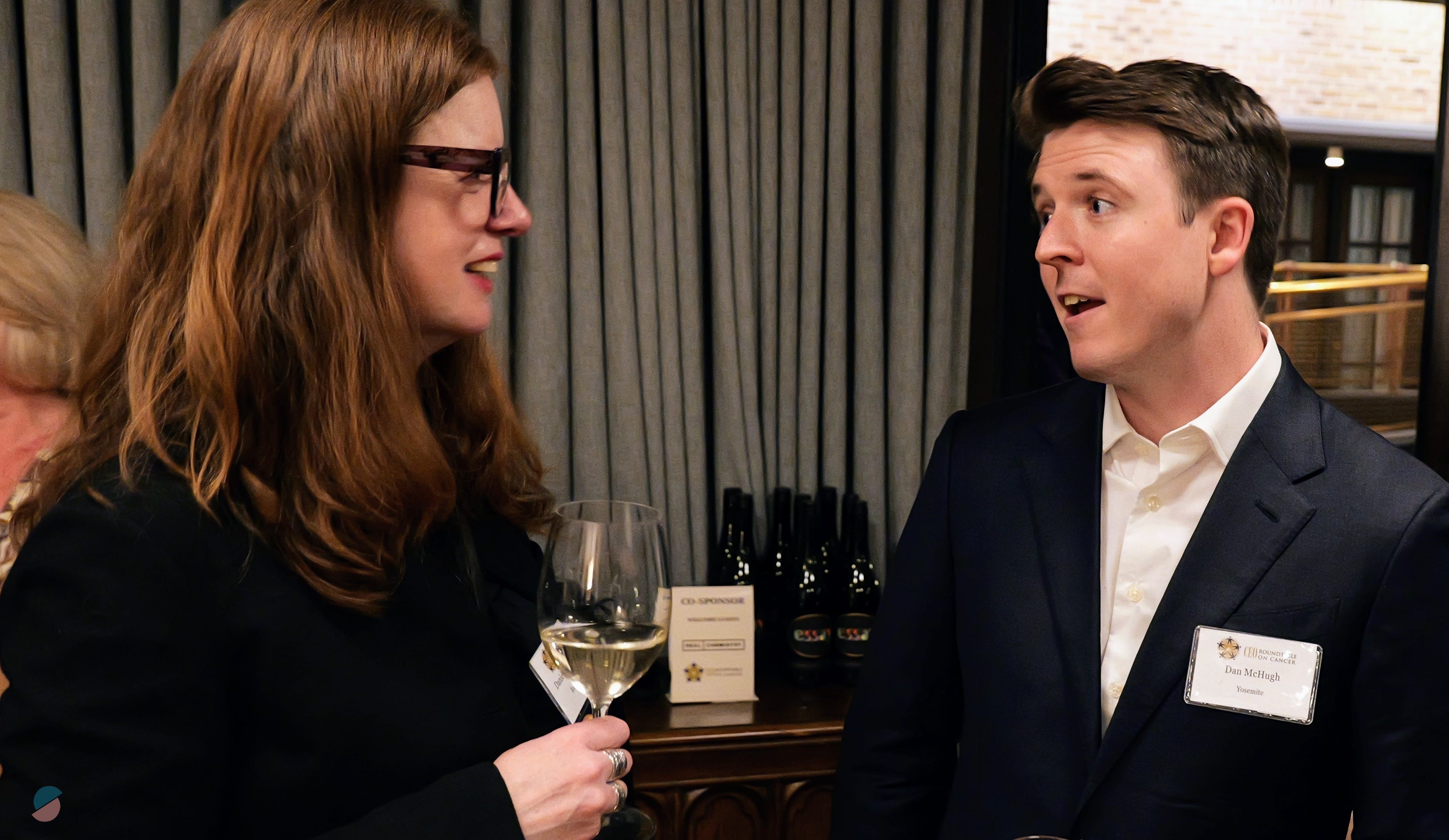
That reality framed my recent conversation with Dan McHugh, an investor whose career has unfolded at the seam between biology and capital. His path, from Stanford bioengineering and the Greenleaf Lab, through Bain & Company and Emerson Collective, to the co-founding of Tune Therapeutics, has repeatedly placed him in moments where scientific promise encounters structural constraint. Across those settings, a consistent pattern emerges: progress in cancer is governed not only by what we know, but by how patiently and coherently institutions are willing to act on incomplete knowledge.
Dan’s time at Emerson Collective, founded by Laurene Powell Jobs, sharpened this view. The organization’s model, lending philanthropy, investment, and long-horizon advocacy, treats time as an asset rather than a liability. Working within that structure clarified something important: capital architecture is not neutral. How money is organized determines which kinds of science are allowed to persist long enough to matter.
That insight now animates Yosemite, the cancer-focused investment platform founded by Reed Jobs, where Dan serves as an investor. Yosemite was built around a specific ambition: to alter the lethality of cancer over a human lifetime. The team approaches this mandate as a design challenge, aligning capital, incentives, and time horizons with the biological realities of the disease, including long development cycles and ambiguous early signals.
Much of our discussion centered on early-stage cancer science, where those realities are most pronounced. Foundational work often precedes validated endpoints, clean hypotheses, or commercial readiness. Traditional venture structures can struggle here, not because the biology lacks importance, but because surrounding systems are optimized for speed and early legibility. Yosemite's hybrid model, pairing venture investment with grant-based risk-taking, reflects a deliberate strategy to preserve optionality, allowing exploration to mature without forcing premature narratives or artificial milestones.

Dan’s experience translating epigenetic science at Tune Therapeutics deepened this perspective. There, he saw firsthand how reimbursement logic, regulatory sequencing, and market expectations quietly shape what is pursued, how long it is allowed to develop, and which uncertainties are tolerated. These forces do not merely follow science, they actively bend its trajectory.
What makes Yosemite distinctive is not just its structure but the trust underlying it. Dan’s long-standing friendship with Reed provides continuity of purpose that supports long-horizon decision-making. In cancer investment, where feedback loops are slow and ambiguity is unavoidable, that kind of alignment functions as differentiating infrastructure, shaping how uncertainty is absorbed and how conviction is sustained when outcomes are not immediately legible.
Throughout our conversation, reimbursement, regulation, and market structure surfaced as governing forces in biomedicine. They encode assumptions about time, value, and acceptable uncertainty, amplifying some paths while quietly filtering out others. As scientific capabilities accelerate, the distance between what biology allows and what institutions can absorb becomes increasingly consequential.
The implication is a shift in emphasis. Progress in cancer depends not only on better tools or deeper datasets, but on whether our investment and institutional architectures can carry complexity over time. Biology will continue to adapt and resist. The determining factor will be whether the systems surrounding it evolve with comparable agility and whether those shaping capital and incentives treat that work as the systems-design challenge it is.