


I. The ghost on the deck
There is a story I have told, in one form or another, for a long time. It is a story about a ship.
In 1747, aboard HMS Salisbury, a young naval surgeon named James Lind took twelve sailors whose gums had blackened and whose limbs had begun to fail them, and he divided them into pairs. To one pair he gave cider. To another, dilute sulfuric acid. To others, vinegar, seawater, a purgative paste of tamarind and cream of tartar. To the last pair he gave two oranges and a lemon a day. Within six days, the citrus pair was nearly recovered. The others were not. Lind had, almost without meaning to, invented the controlled trial. He had also, in the same gesture, conjured a ghost that would haunt medicine for the next three centuries: the Average Patient. A statistical phantom that exists nowhere except in spreadsheets, and yet around whom we built every regulatory fortress, every approval pathway, every billion-dollar trial that followed.

I told this story once, years ago, to a young contractor at the FDA at a meeting about something else entirely. His name was Jeremy Walsh. He listened the way he always does, carefully and without performance, and when I had finished, he asked the question I have come to recognize as his particular gift. He asked it again today on a stage at White Oak, MD, as the FDA’s first Chief AI Officer, in front of a room full of cameras, reporters, and pharmaceutical executives:
Wait. We are still doing it that way?!
In our meeting years back, I told him that yes, more or less, we were. That what changed between the Salisbury and the modern clinical trial ecosystem was not the basic shape of the enterprise but the scale at which we did it and the bureaucratic stratigraphy we had laid down on top of it. Sponsors run trials. Sites collect data. The data is packaged, cleaned, narrativized, and shipped across in pages of PDF, thousands of pages in a typical IND, some of it not even human-readable. Counts of counts of counts. Tables of tables of tables. The regulator sees the data only after the sponsor has finished telling itself the story of what the data means. Lind would have recognized the structure. He would not have recognized the latency. In a way, we have actually regressed.
My conversation with Jermey became a white paper. The white paper went up the chain. Nothing happened, which is what usually happens, and Jeremy went back to his other work. But he kept asking the question. He asked it for years. He asked it as a contractor and he asked it after he became Chief AI Officer at the FDA and he asked it in every meeting where someone told him the way things were done was the way they had to be done. Today he got to answer it.
II. What was announced
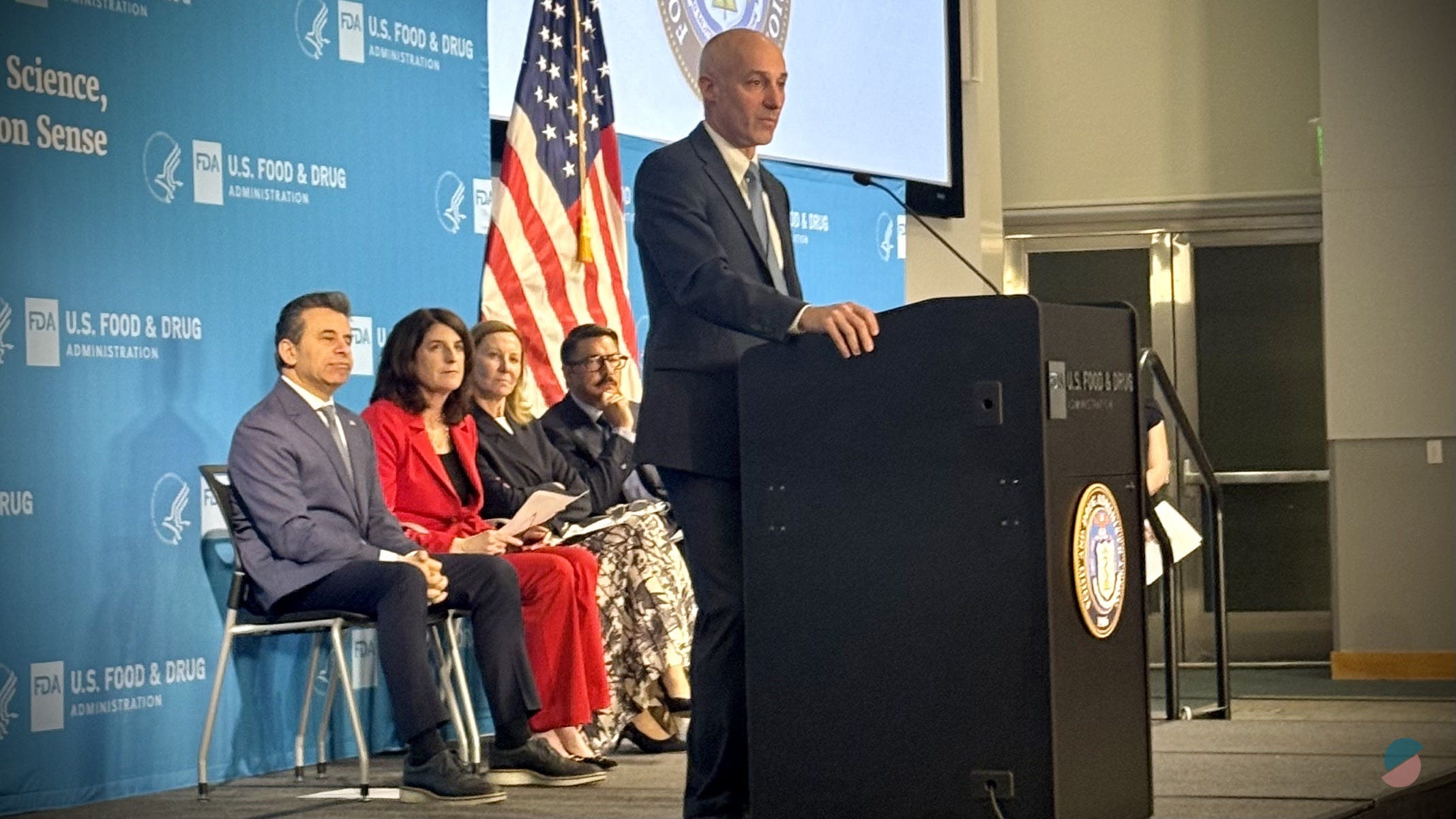
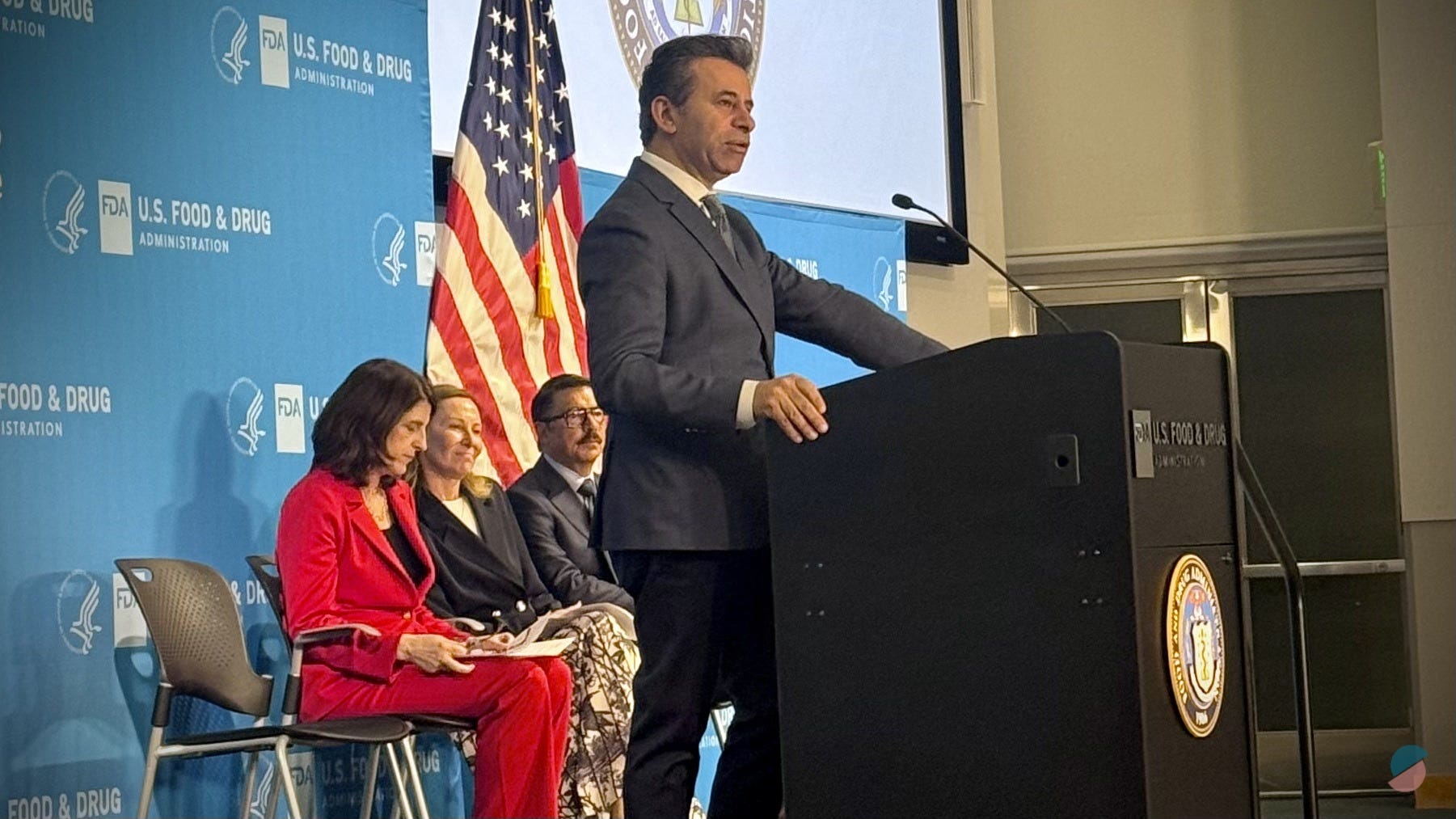
Today, the FDA announced the real-time clinical trial initiative involving AstraZeneca’s TRAVERSE study in mantle cell lymphoma, with sites at MD Anderson and Penn and Amgen’s STREAM-SCLC trial in small cell lung cancer. A Request for Information also opened today. A broader pilot program launches this summer. Commissioner Marty Makary, who led the announcement, framed the rationale precisely. For sixty years, he said, we have been conducting clinical trials in essentially the same way, and the lag between data and decision has not been a feature of safety. It has been sediment. The accumulated weight of a system that was built when data lived in filing cabinets and submissions arrived by truck. The agency, he said, can reduce that lag without cutting any corners on safety, which remains the FDA’s number one priority. He said the line plainly, and he said it more than once.
This is the part of the announcement that most deserves attention, because it is the part that is easiest to misread. What the FDA is doing is not deregulation. It is a re-engineering. The protocols are still protocols. The investigators still consent patients. The reviewers still review. Paul Burton, Chief Medical Officer at Amgen, was deliberate on this point. Pragmatic real-time clinical trials, he said, do not mean clinical research with less rigor. The fundamentals of good science do not change. Protocol development, protocol oversight, informed consent, monitoring, strong governance, FDA review. All of it remains absolutely standard and absolutely essential. Patient safety and data integrity, he said, will always be the north star.
That language matters because the architecture being introduced is one in which safety is not preserved by latency but expressed through signal. Today’s announcement is, in this sense, a strengthening of efficacy-signal detection and pharmacovigilance, not a relaxation of them. Makary made the point directly in the press Q&A. Safety signals and clinical endpoints are agreed upon by the sponsor and the FDA in advance, as they have always been. What changes is that those signals can now be transmitted to the agency in real time rather than packaged into a submission months or years later. During the pilot, sponsors will continue to submit data through the conventional pathway in parallel, so that the agency can compare the two channels and refine the model. Nothing has been removed from the safety apparatus. Something has been added.
What changes, then, is the latency. What changes is the assumption, baked so deeply into the architecture of clinical development that we forgot it was an assumption, that the regulator should see the data only after the sponsor has packaged it. Jeremy described the new model on stage in language that I suspect will sound radical to people outside the field and obvious to people inside it. We do not need everything we have ever seen. We need signals. We need to define, with the sponsor and the FDA together, what would actually change a regulatory decision, and we need to see those things happen as they happen. Not a year later. Not at the next data lock. Now.
III. Listening to the patient instead of to the form
The first time I worked with Jeremy was at the National Cancer Institute, where we designed a clinical trial in adult patients with cancer using voice recognition and facial recognition to estimate pain and mood. The patient sat down. The cameras and microphones did the rest. No survey. No clinician translating an expression into a number on a Likert scale. The signal came directly from the human being in the room, in real time, captured continuously, with a fidelity that no questionnaire has ever achieved or could. That dataset, to my knowledge, remains the largest of its kind.
The deeper observation that emerged from that work, and that I think is the actual intellectual core of what was announced today, is that the data we collect in clinical trials is not always a faithful image of the patient. It is a heavily compressed, heavily edited, heavily delayed reconstruction. The patient experiences the disease in continuous time. We sample it in discrete time. The patient lives in signal. We submit in summary. Every step in the pipeline from bedside to FDA reviewer is a lossy compression, and the loss is not random. It systematically privileges what is easy to measure and structure over what is meaningful and continuous. The Likert scale erases the wince. The case report form erases the silence before the patient answers. The quarterly data lock erases the morning the toxicity actually appeared.
What changes when signals flow in real time is not just the speed of regulatory decisions, although that matters and it matters enormously to the patient who is in hospice waiting for the drug. Jennifer Litton, the Chief Clinical Research Officer at MD Anderson and one of the academic leaders behind the AstraZeneca trial, made the point with the kind of moral clarity that only someone who has stood at the bedside can make. She is an oncologist. She is the daughter of two parents with cancer. She was diagnosed with cancer this year, and finished surgery and radiation. When you do not know whether the next patient who needs a clinical trial is going to be you or someone you love, she said, you want that trial available right now. The latency in our current system is not abstract. It is measured in funerals.
What changes, then, is also the resolution of what the regulator can see. We move from low-frame-rate snapshots of an aggregate to a continuous record of individuals. The Average Patient, the ghost we summoned on the deck of the Salisbury because we had no other way to reason about populations at scale, becomes optional. Not abolished. Optional. We can still aggregate when aggregation is what the question requires. But we are no longer forced to aggregate as a precondition of being able to see anything at all.
IV. The renovation
There is a temptation, when an announcement of this kind lands, to declare that the old order has fallen and a new one has taken its place. That is not what has happened today. Two trials. One technology partner (Paradigm Health). This is the first sentence of a new chapter, not the chapter itself. The hard work, the transformation, is the scale-up. It is the second sponsor, and the tenth, and the hundredth. It is the standards work that has to happen quietly behind the announcements, the EHR-to-EDC plumbing, the sponsor data systems that have to be re-architected, the reviewer workflows that have to be redesigned around streams instead of submissions. It is, as one industry veteran told me afterward, the long stretch where we will have to run both systems in parallel, the old way and the new way at once, before the old way can finally be retired.
There is also the human dimension, which is easy to miss in the technical conversation. Emma Meagher, who runs clinical and translational research at Penn and is one of the principal investigators on the AstraZeneca trial, made an interesting observation. She has been a trialist on the front lines for thirty-two years. She knows, better than almost anyone, how punishing the current process is on the people who actually run it. The research coordinators. The trial nurses. The project managers. They are virtually impossible to find and harder to keep. What this innovation does, she said, is not just shorten the FDA’s timelines. It eases the academic interface of patient care. It gives the workforce that sustains clinical research a reason to stay. The renovation is not only of the regulatory architecture. It is of the human one.
What Makary said almost in passing was, I think, the line that we should remember. He told the room, with a self-deprecating shrug, that he was not going to show a PowerPoint, because PowerPoint had traumatized him over the course of his career. He showed one graphic. The drug development and approval process, beginning to end. Each phase a box. Each box, he said, currently being re-engineered. The graphic is the same graphic we have been showing for sixty years. The boxes are the same boxes. What changes now is what flows between them, and how fast, and at what fidelity, and to whom.
This is not a revolution. Revolutions tear down. This is something rarer and harder. This is a renovation of a working building, conducted while the building remains occupied by patients who are, right now, today, waiting for the next box to open. The ghost of the Salisbury, the Average Patient who never existed, can finally begin to be retired. Not because we have stopped caring about populations, but because we have learned, at long last, how to listen to individuals in real time, and to aggregate that listening without losing it.
To Jeremy, congratulations. He kept asking the question for years after most people would have stopped. To the team at FDA, the sponsors, the academic centers, the technology partners who made this real, congratulations. To everyone watching from outside the agency wondering whether this is a small thing or a large thing, I will say this. It is an important thing. And in ten years it can hopefully look like the thing that broke the dam.
The signal is moving. The ship has finally left the harbor. Now we have to learn to navigate.
Excellent summary. It will be very interesting to see the data timelines on these pilot trials assuming the FDA releases them. Also appreciate the absence of ppt!
What an article. Would this apply to devices, or only drugs? If so, are there any specific notes for class III vs class II device trials? Where might I go spelunking for such insights? Thanks again.